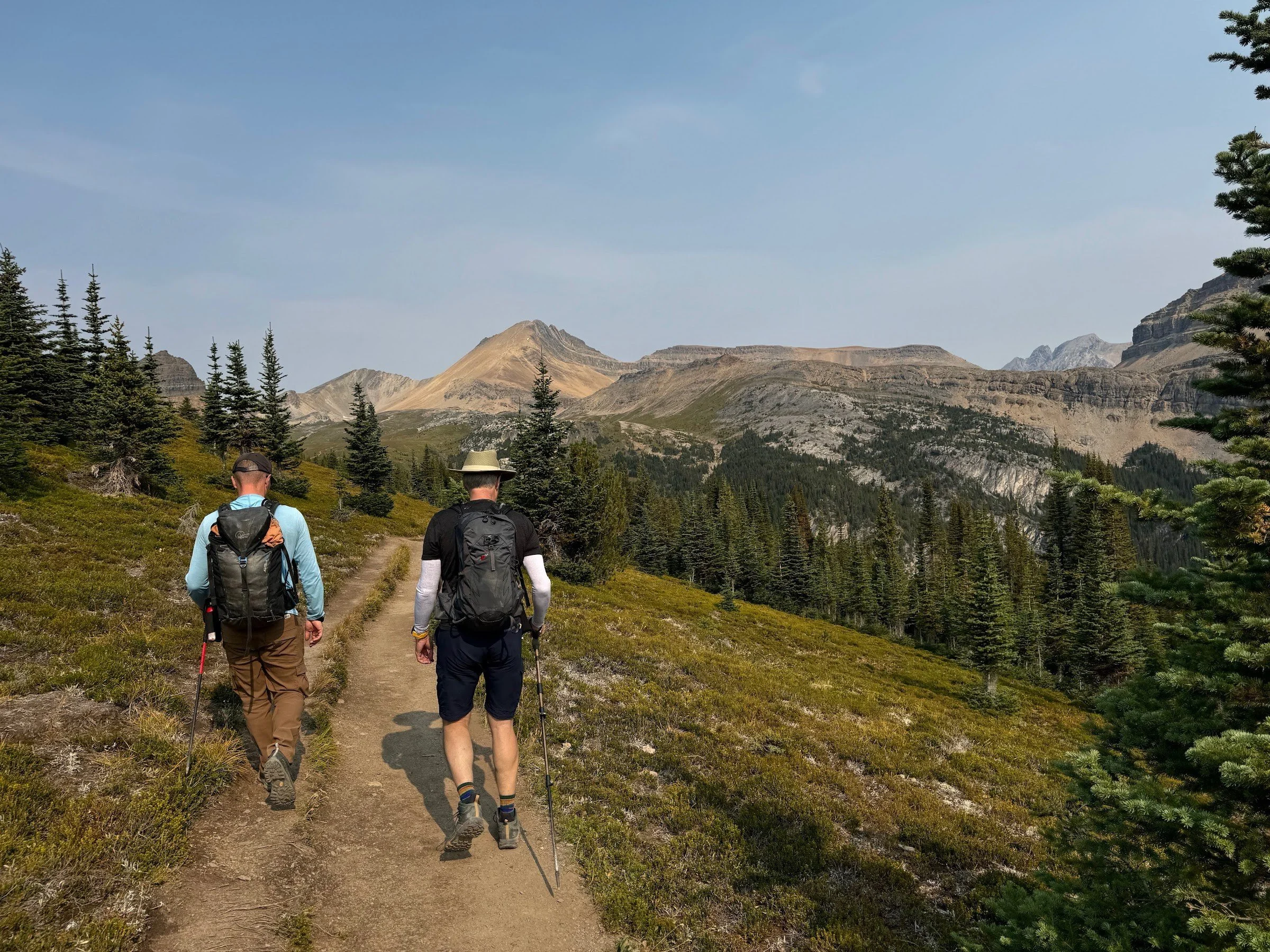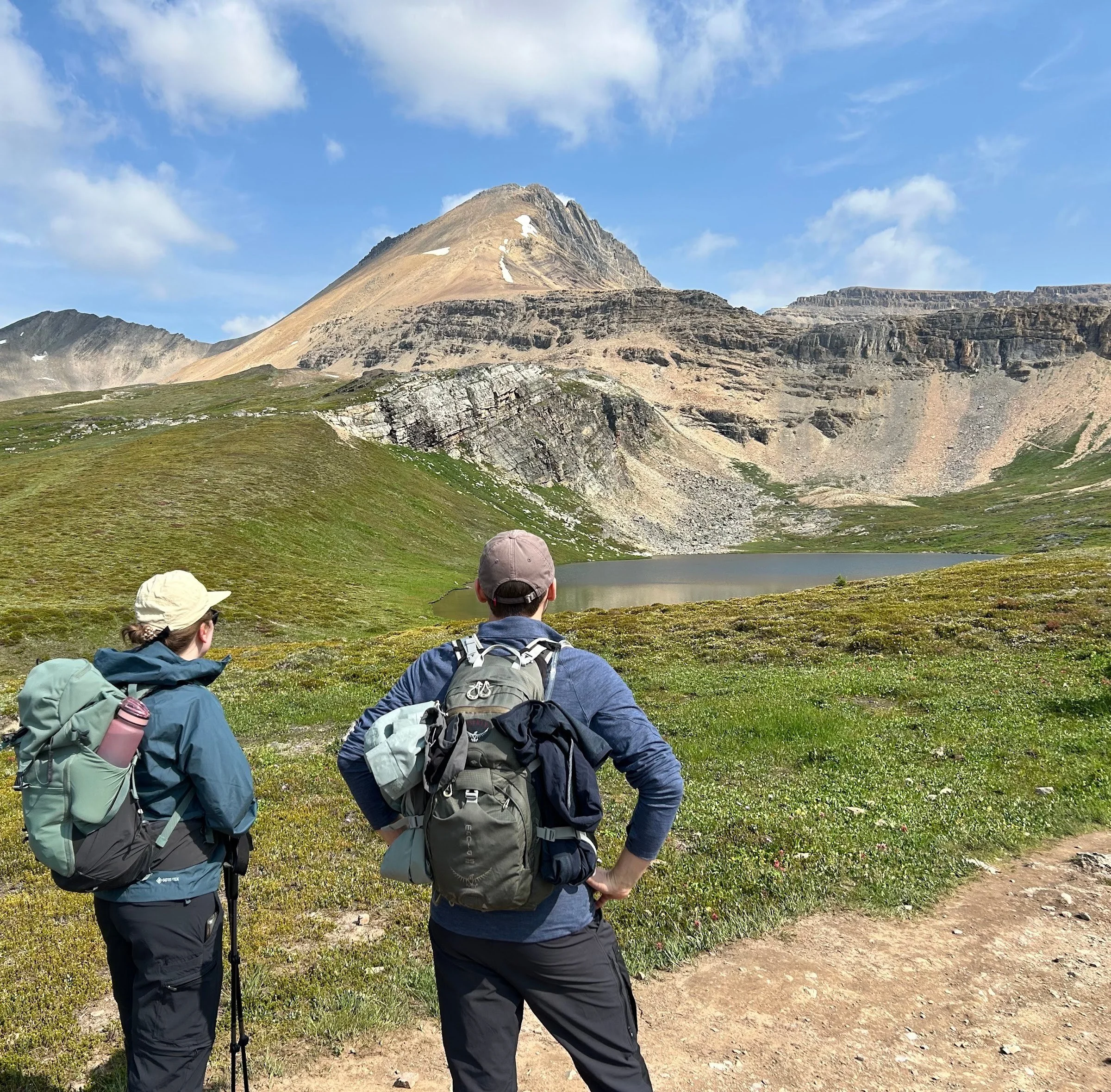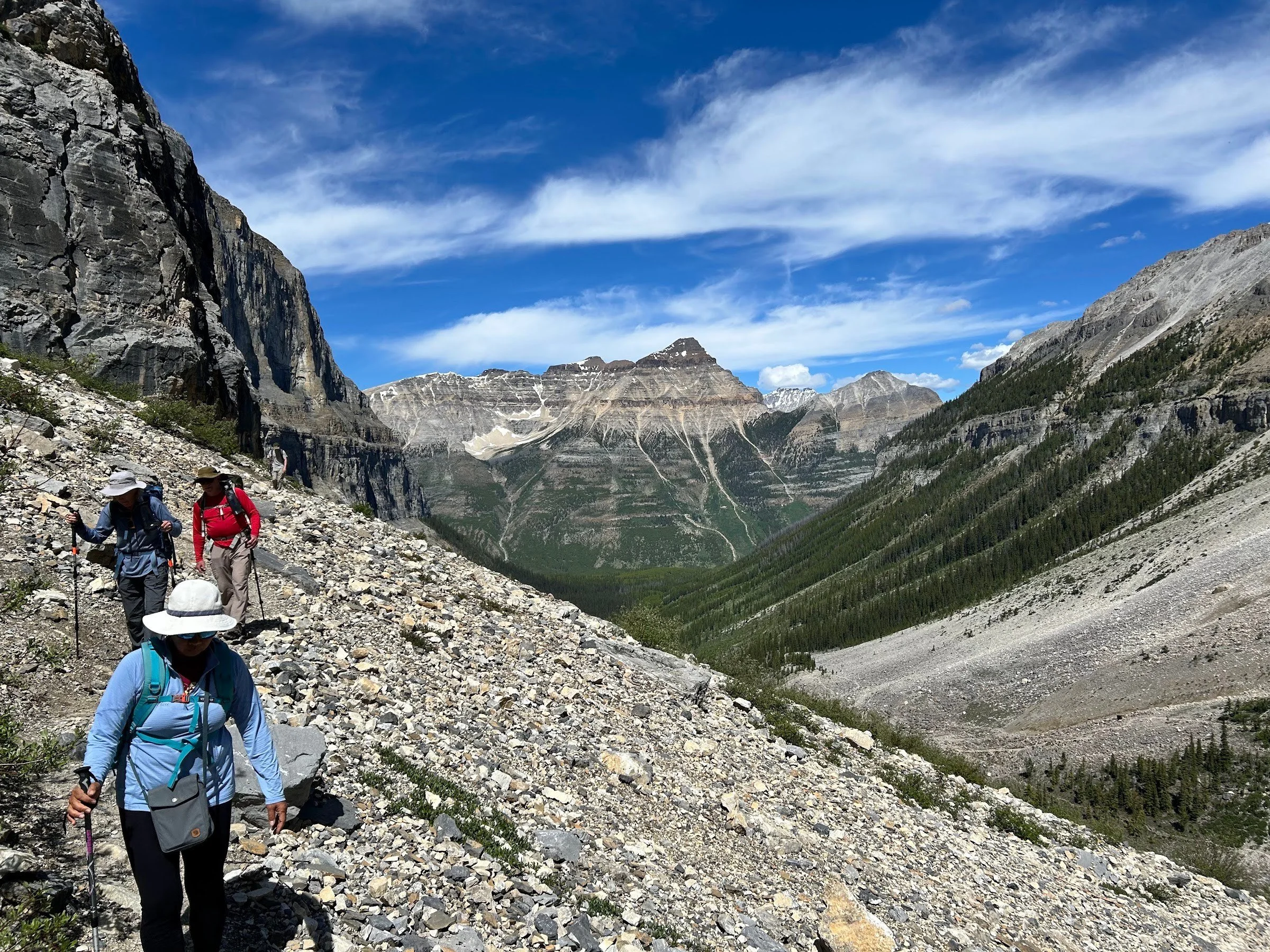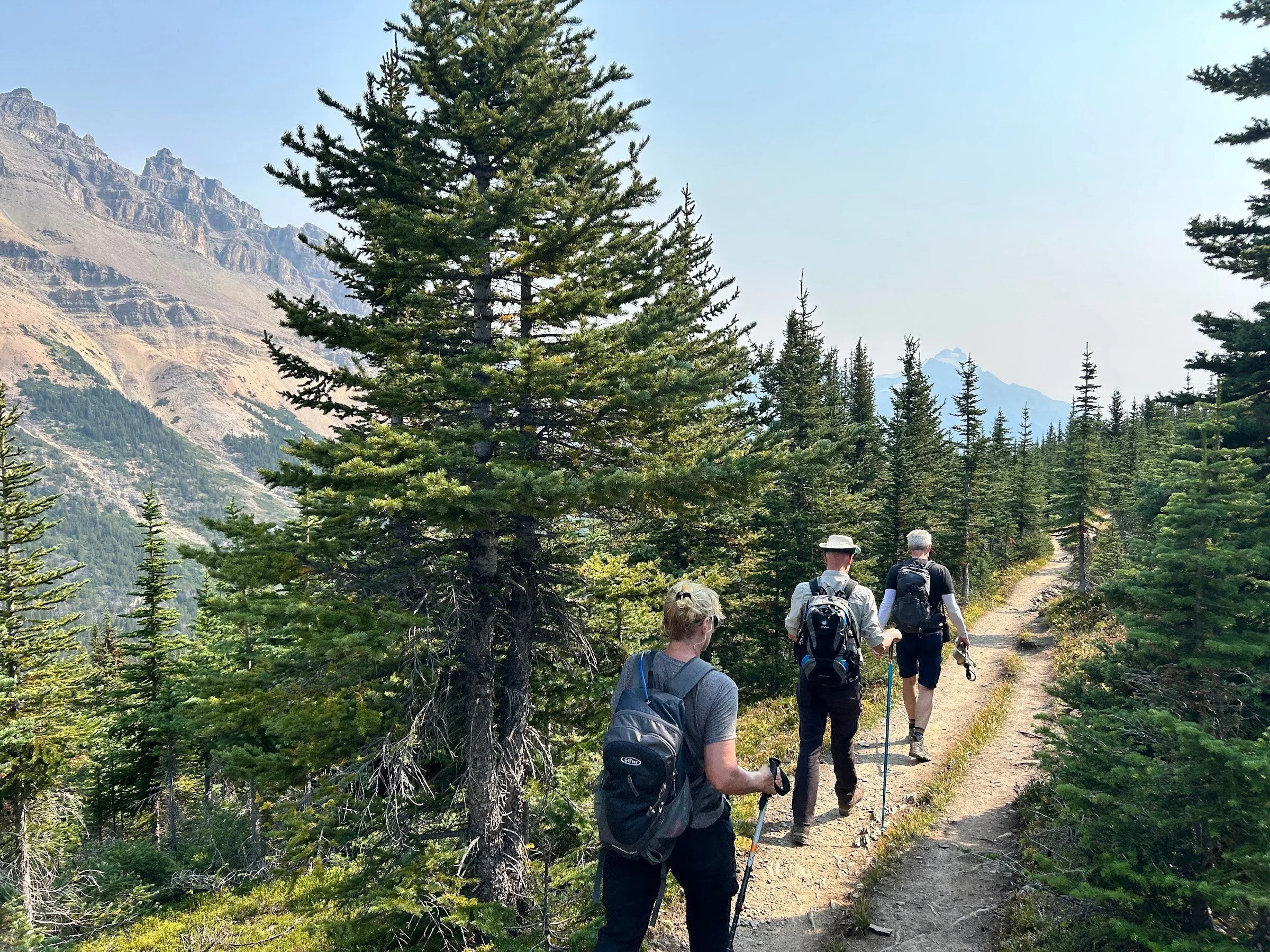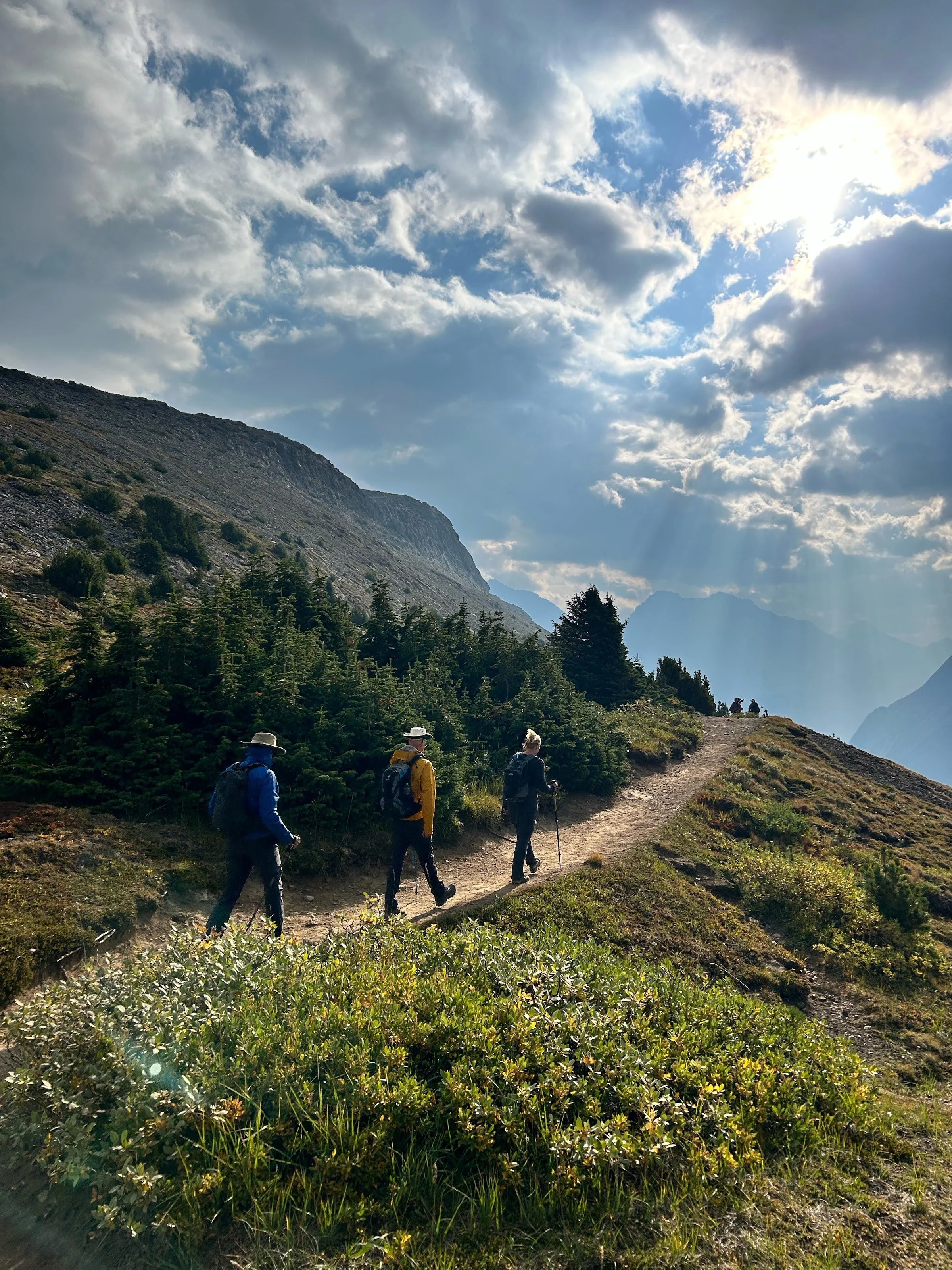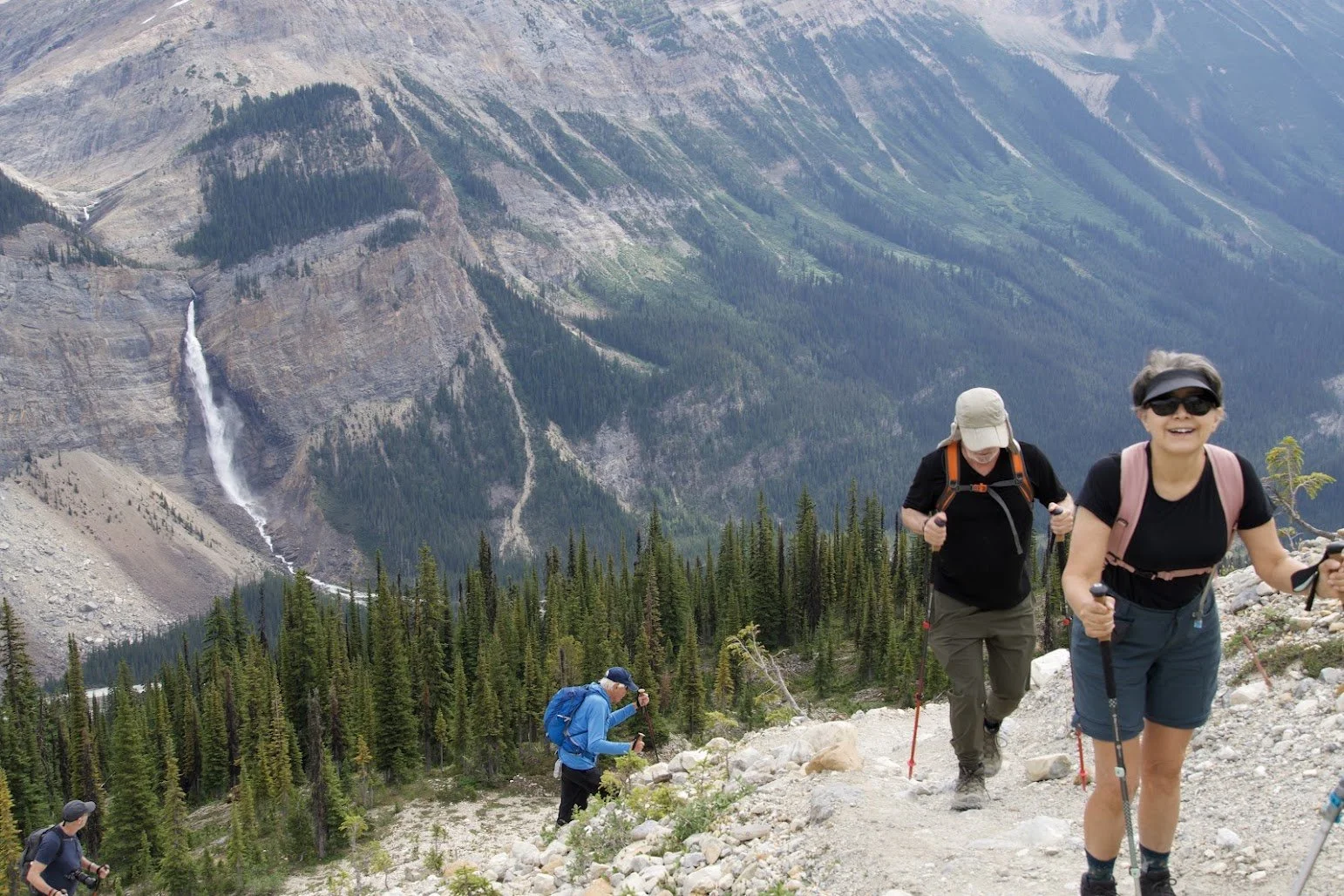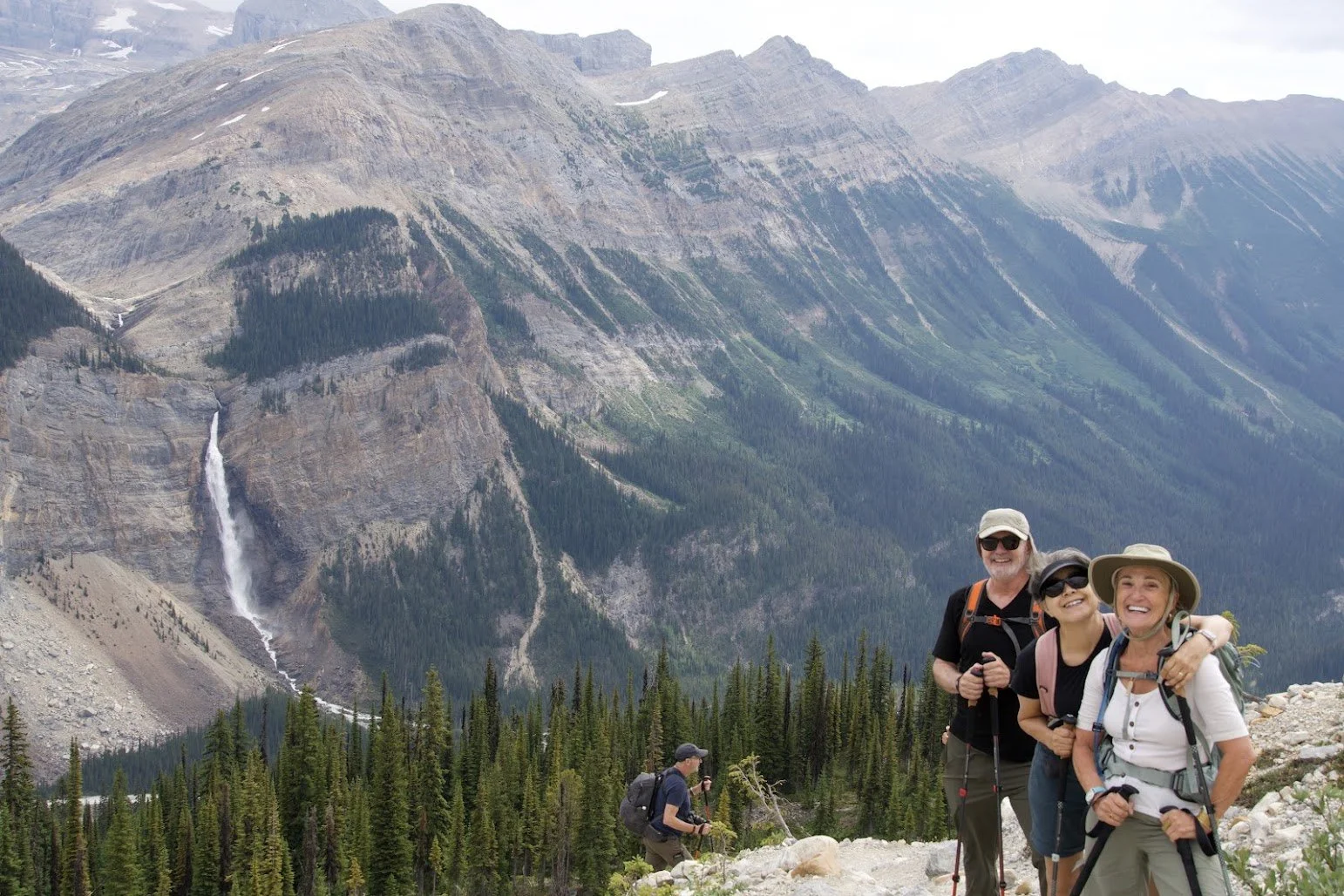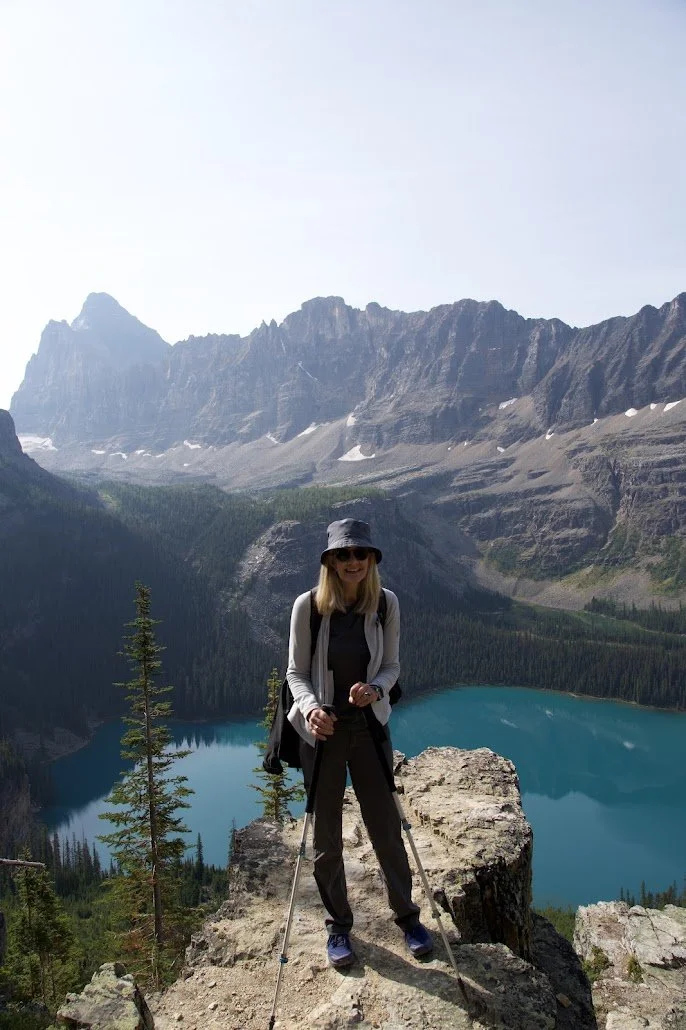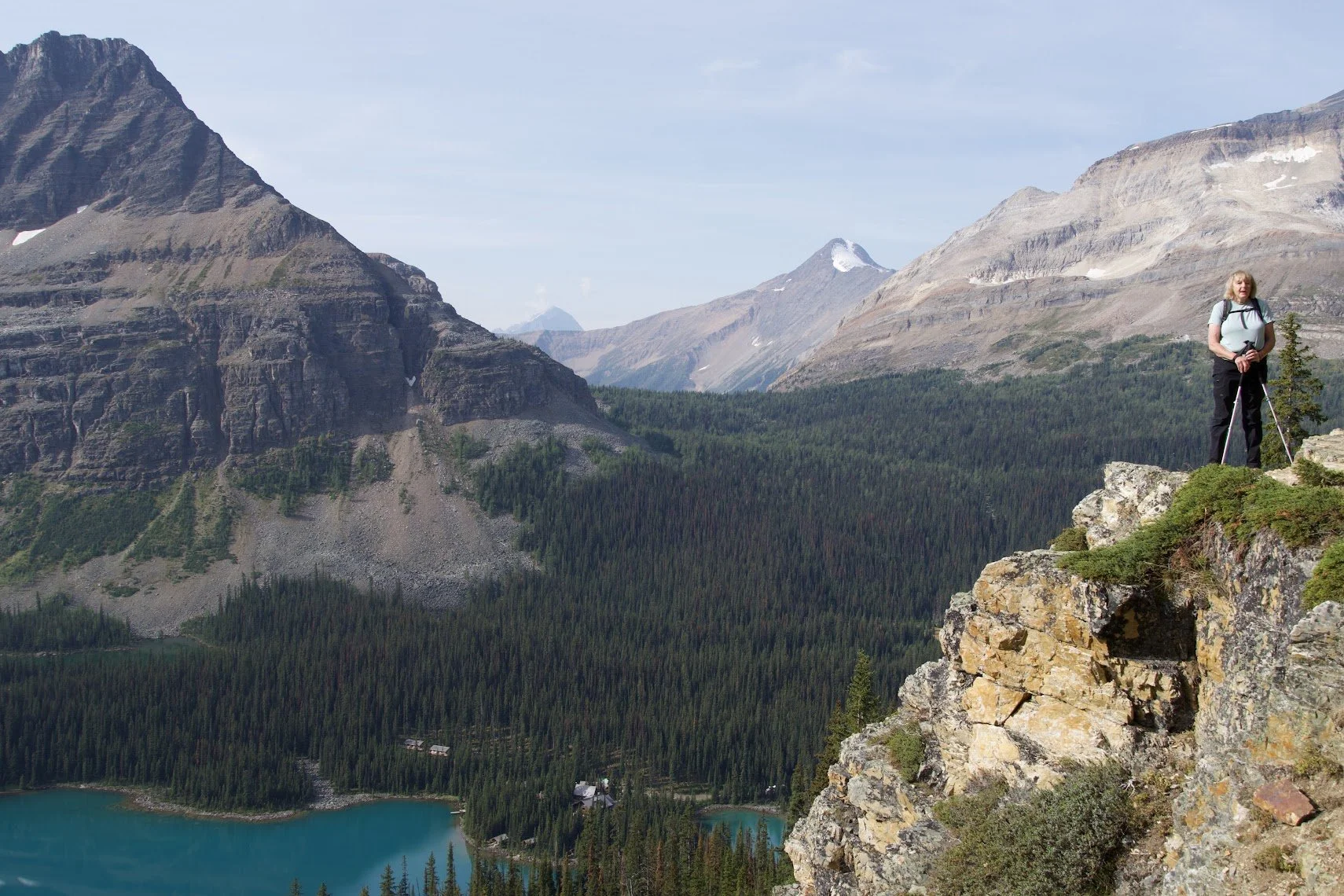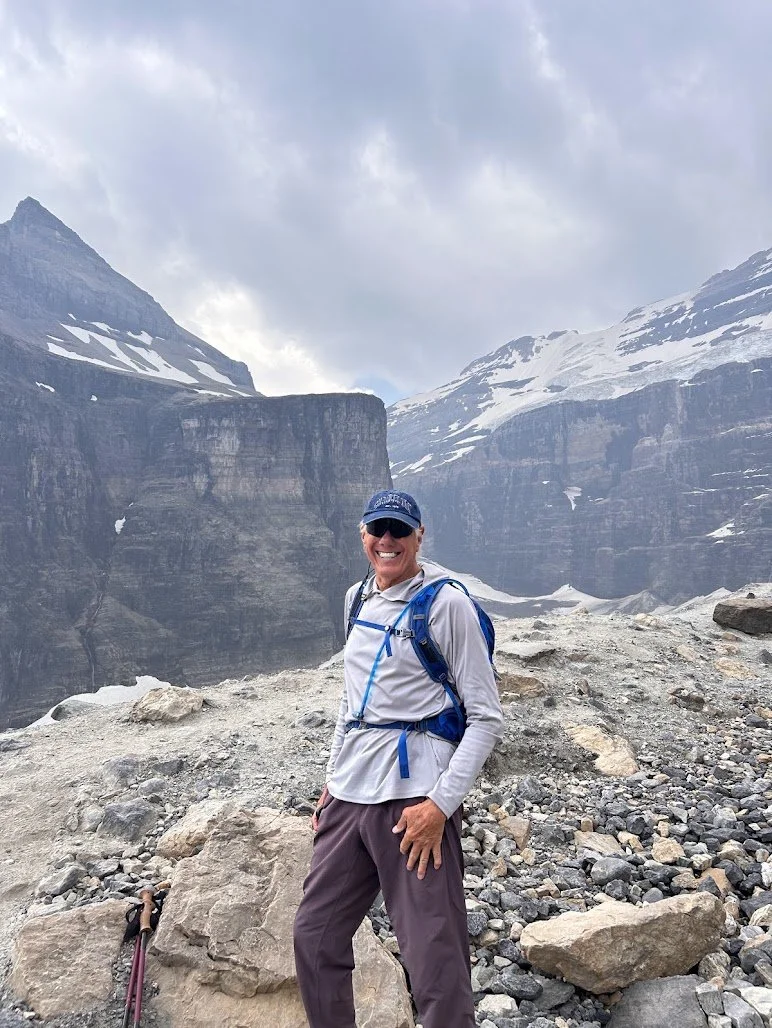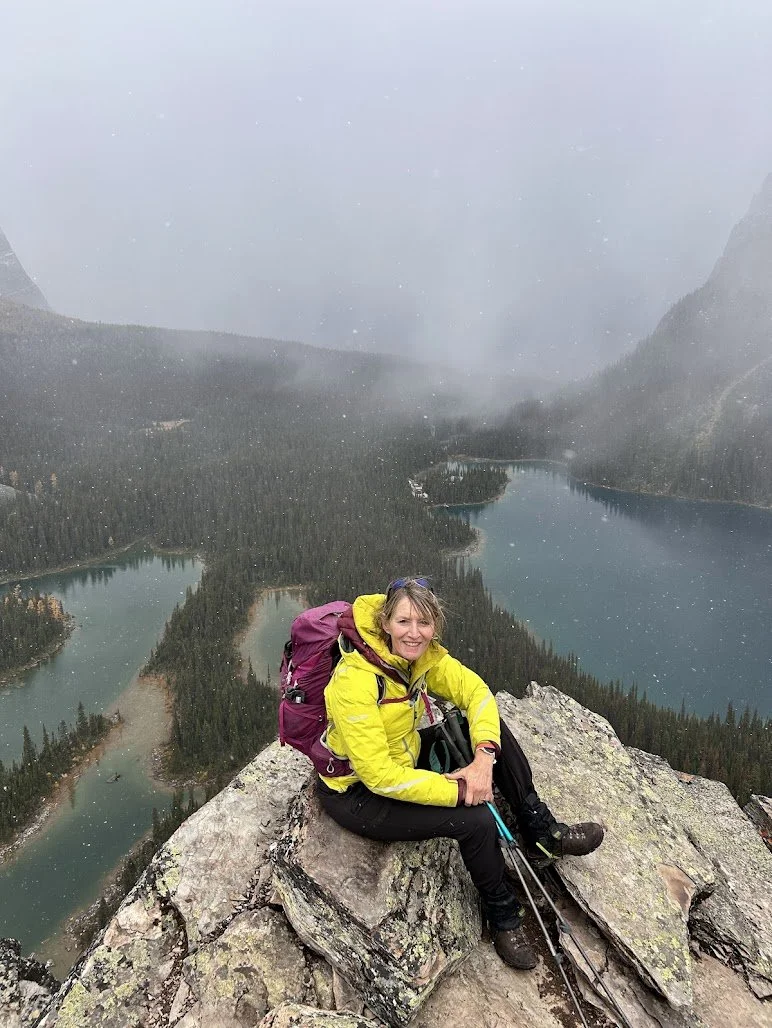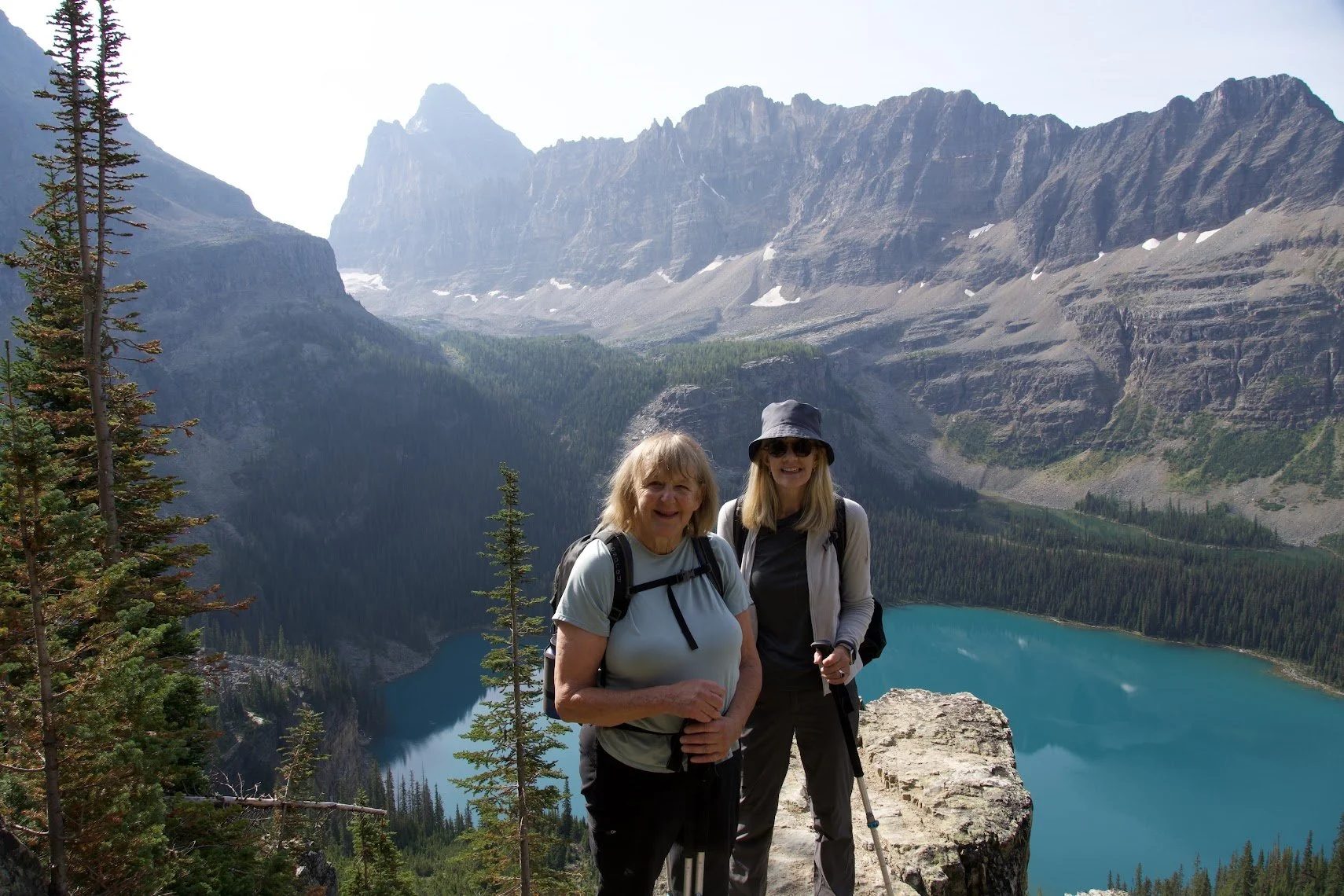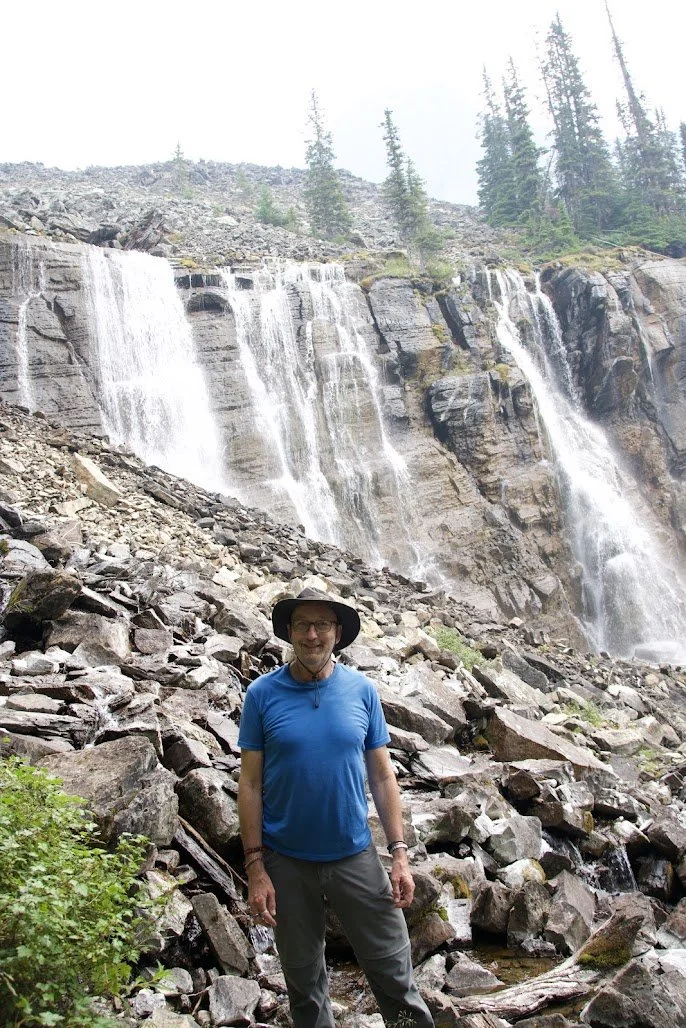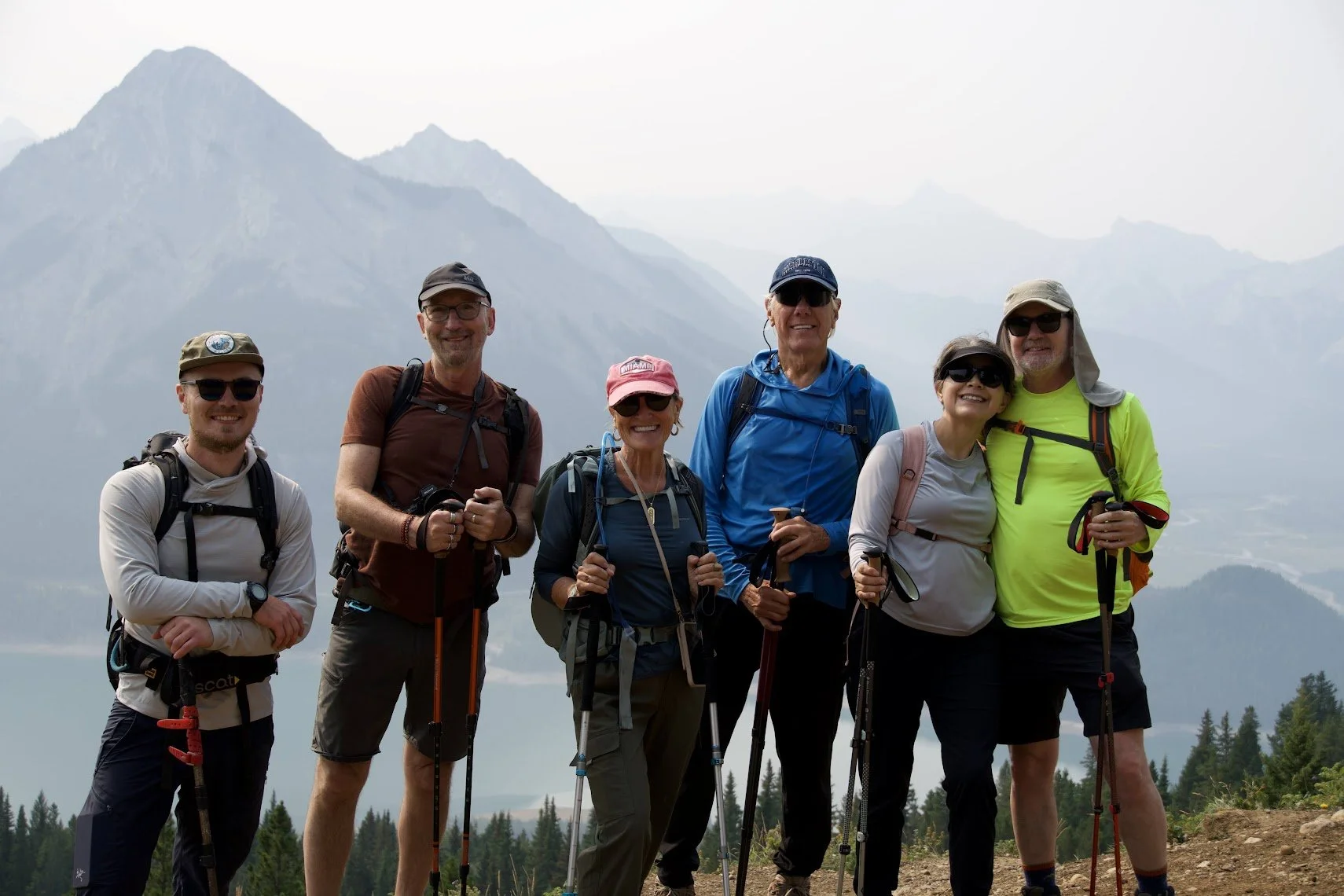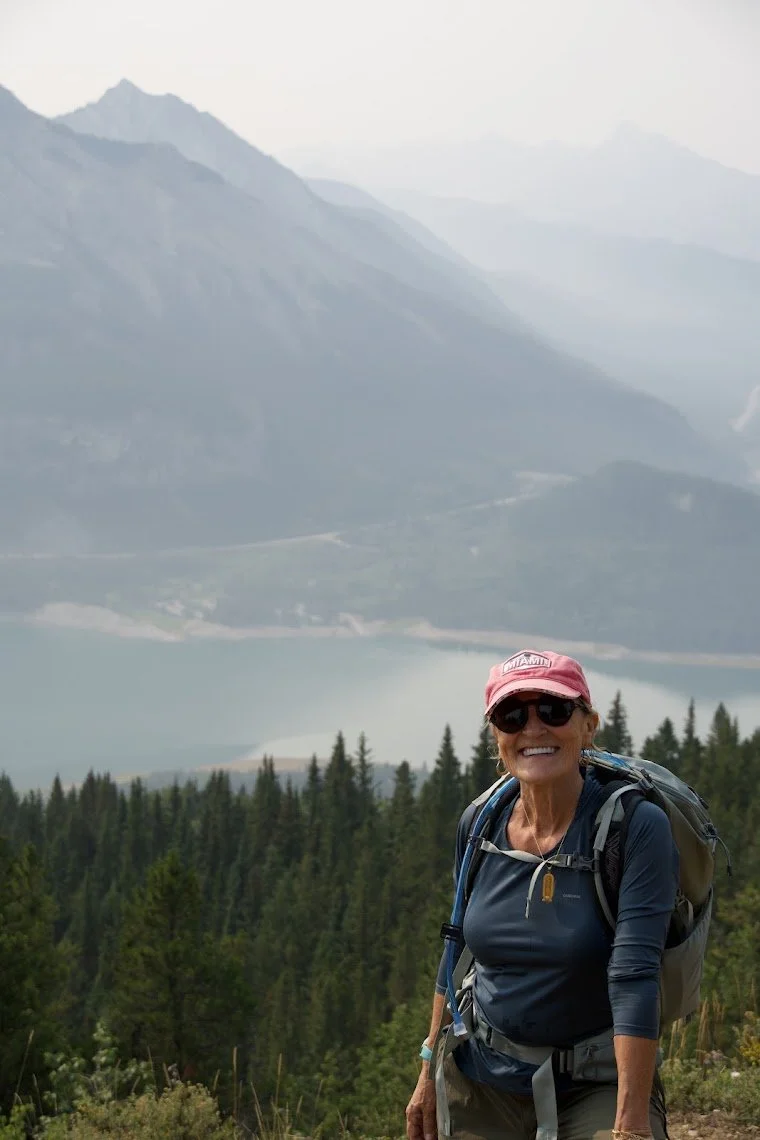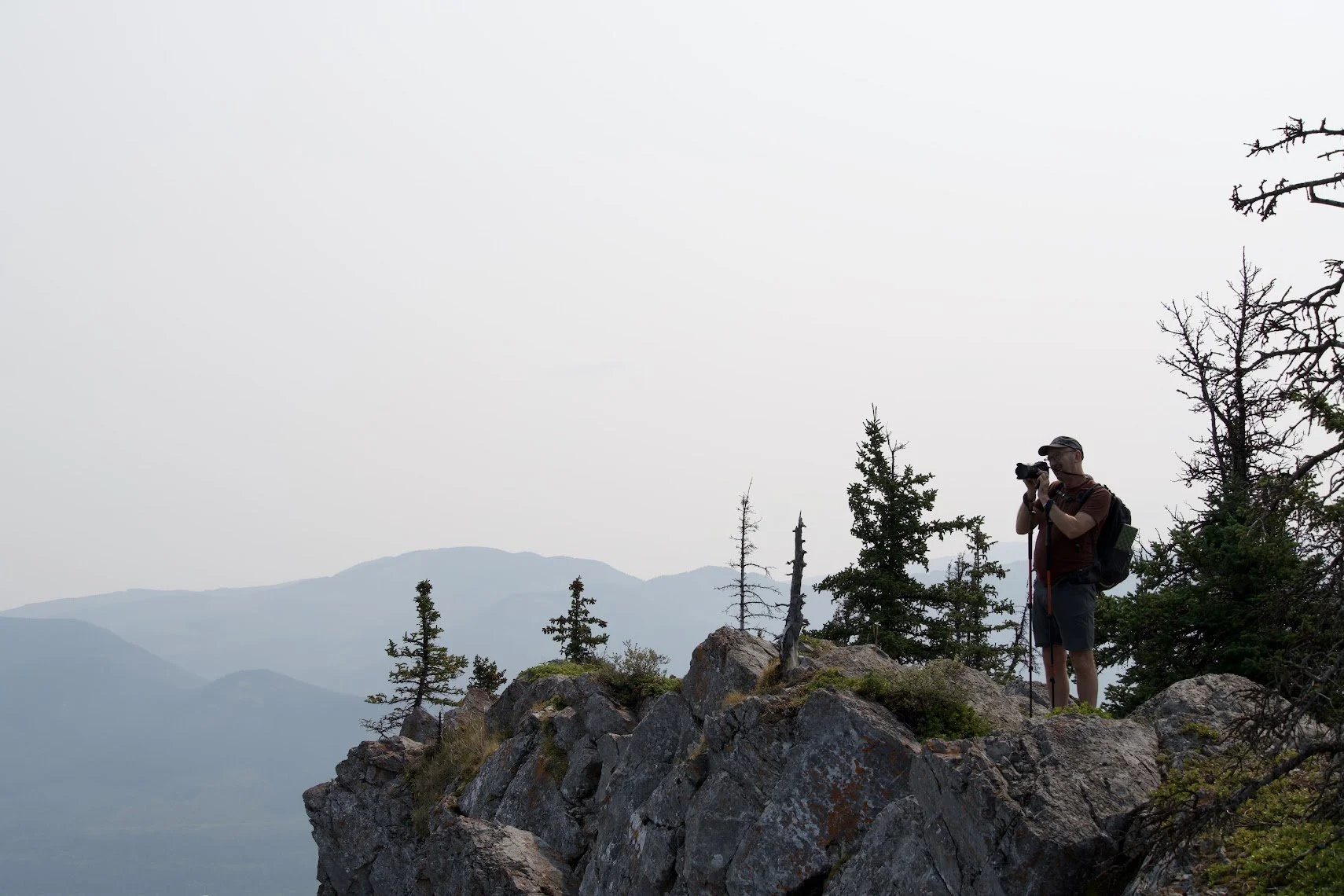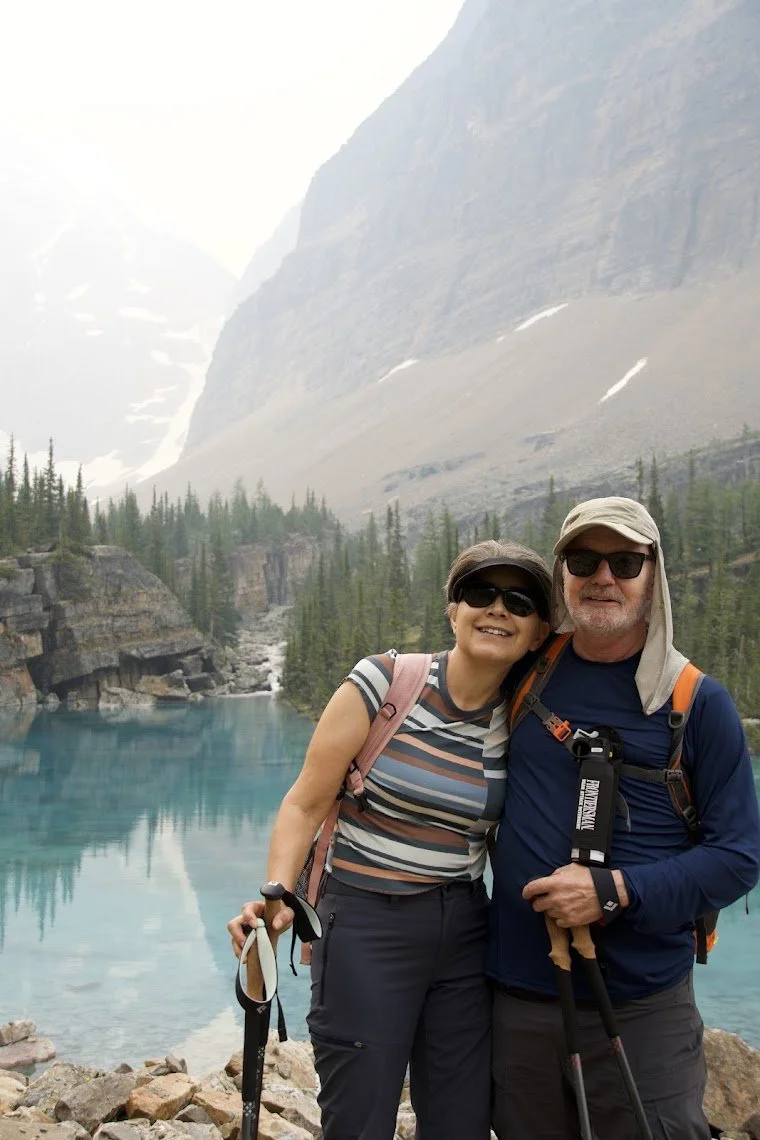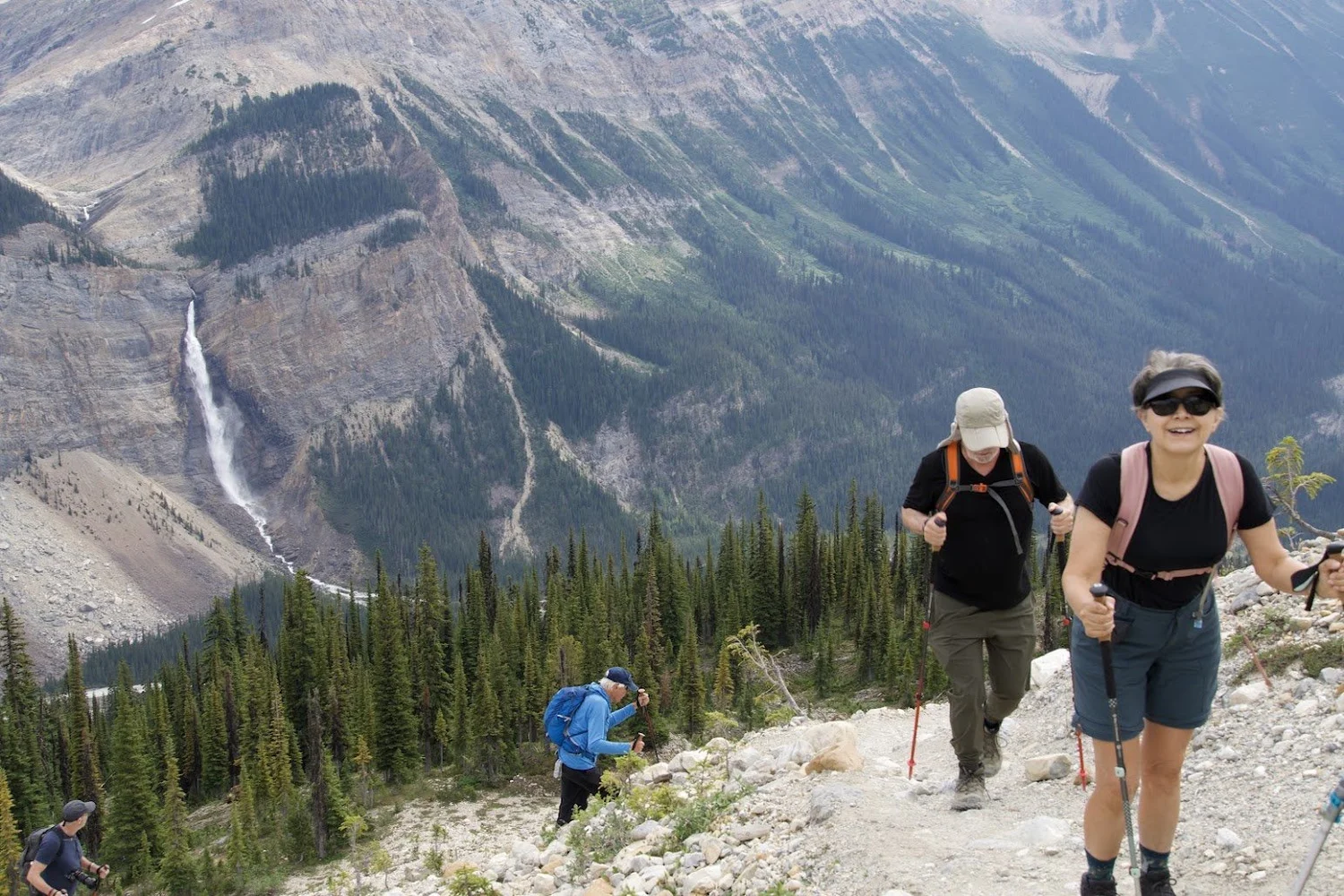
The view at the top doesn’t care how old you are.
- From the Columbia Wild Guides team
- 9-minute read
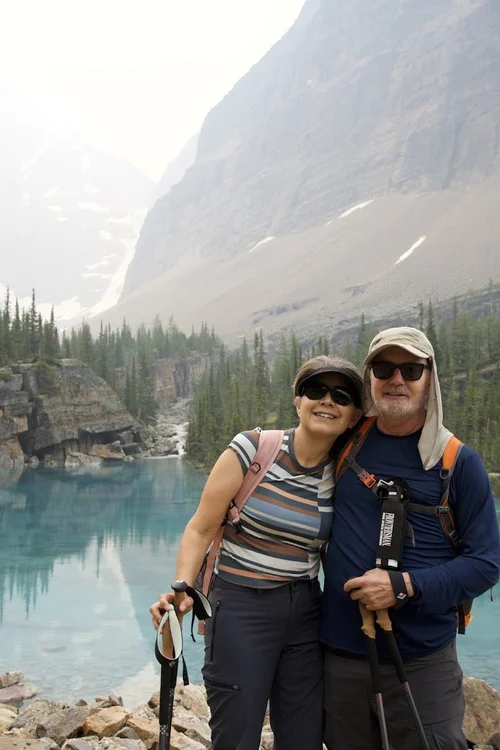
There’s a moment on almost every good trail in the Canadian Rockies when the forest thins, the air cools, and the valley you started in drops away behind you. Suddenly there’s a glacier across the way, or a lake so blue it doesn’t look real, and everyone in the group goes quiet for a second.
That moment doesn’t care how old you are. It’s just as good at 68 as it is at 28. Maybe better, because by now you know to stop and take it in.
Plenty of the hikers on these trails are in their 60s and 70s, and many of them are having the best mountain days of their lives. If you’ve been wondering whether a hiking trip to the Rockies is still for you, this is for you: a few honest thoughts on fitness and pace, the trails worth your time, and how to enjoy the mountains for many years to come.
Maybe better, because by now you know to stop and take it in.
It isn’t about age. It’s about preparation.
The honest answer to “Am I too old for this?” is almost always no. The better question is: how ready is my body for a day of up and down?
As a rough guide, if you can walk 8 to 14 km with 500 to 800 m of elevation gain, and do it again the next day, you’ll be comfortable on most of the classic day hikes here. That’s the standard we use for our own multi-day trip, at a steady pace with plenty of breaks.
If that sounds like a stretch today, it doesn’t have to stay that way. Two or three months of regular walking, with hills or stairs worked in, makes a remarkable difference. Wear the boots you’ll hike in. Carry a daypack with a little weight in it. Try trekking poles at home, not on the first morning of your trip.
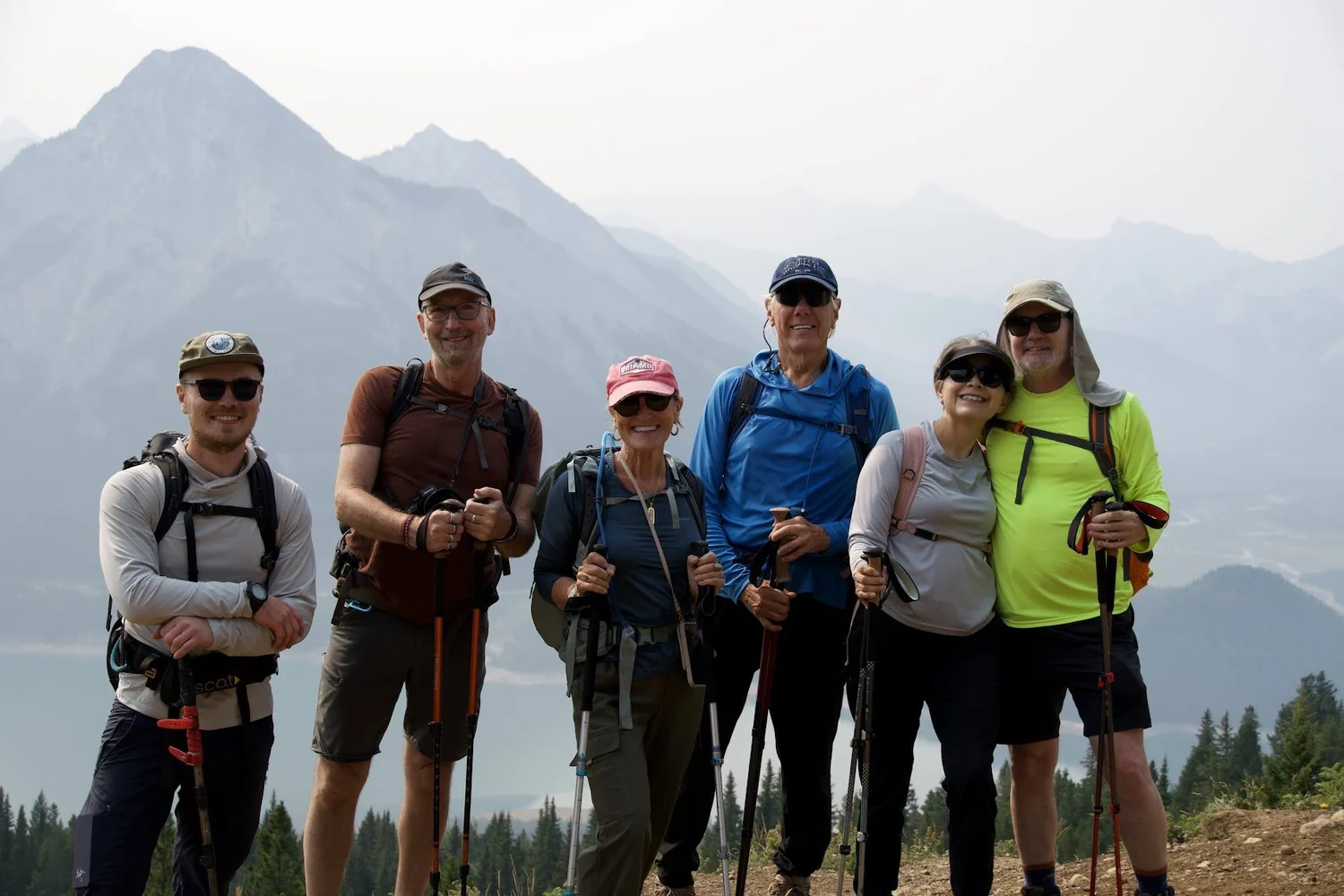
The art of going slowly
Somewhere along the way, hiking turned into a race: kilometres logged, summits ticked, times compared. The mountains have never cared about any of that. On the trail, the slow hiker usually sees more.
Many Rockies trails start well above 1,500 m. The air is thinner than most people are used to, and it’s normal to feel your breath a little sooner than at home. The answer isn’t to push through. It’s to slow down before you need to, and to find a pace you could keep while holding a conversation.
Breaks aren’t a sign that you’re struggling. They’re where the good stuff happens: a marmot sunning itself on a boulder, the sound of meltwater under the rocks, the first real view of the glacier. On a good hiking day, the rest stop is part of the hike.
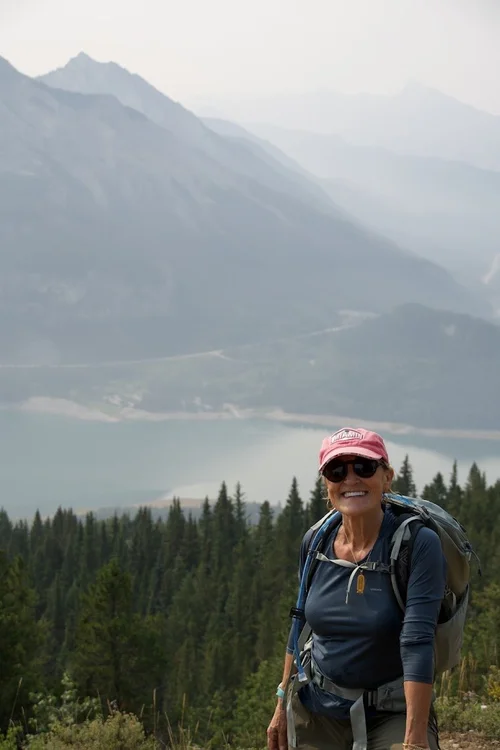
Walk slower than you think you need to.
Stop more often than you think you should.
Look up.
Trails that give more than they take
Some of the most beautiful places in the Rockies ask surprisingly little of your knees. Here are a few favourites, from gentle strolls to bigger days.
-
Moraine Lake Rockpile
EasyBarely a kilometre to one of the most famous views in Canada: the turquoise lake beneath the Valley of the Ten Peaks. Moraine Lake is shuttle-only, so leave the driving to someone else and arrive early. For a longer, quieter walk, carry on to Consolation Lakes (6.3 km, 170 m gain).
-
Emerald Lake Loop
EasyA nearly flat loop around a lake that lives up to its name, with peaks on every side and plenty of places to sit. Perfect for a gentle morning or a rest day between bigger hikes.
-
Ptarmigan Cirque
ModerateThe quickest way we know into true alpine country: a short loop from the highway into a high bowl of meadows and peaks, and beautiful in larch season. If you drive yourself, you’ll need a Kananaskis Conservation Pass.
-
Boom Lake
ModerateLonger than it is steep. A quiet forest trail to a long lake beneath limestone cliffs, and peaceful even in midsummer.
-
Lake Agnes
ModerateA steady climb above Lake Louise to a small lake and its historic tea house. Steady rather than steep, with plenty of places to catch your breath on the way up.
-
Stanley Glacier
HardFor when you’re ready for more. The trail climbs through a forest regrowing after wildfire into a hanging valley of cliffs, waterfalls and glacier views.
Ordered from gentlest to biggest climb. Trail figures are from AllTrails.
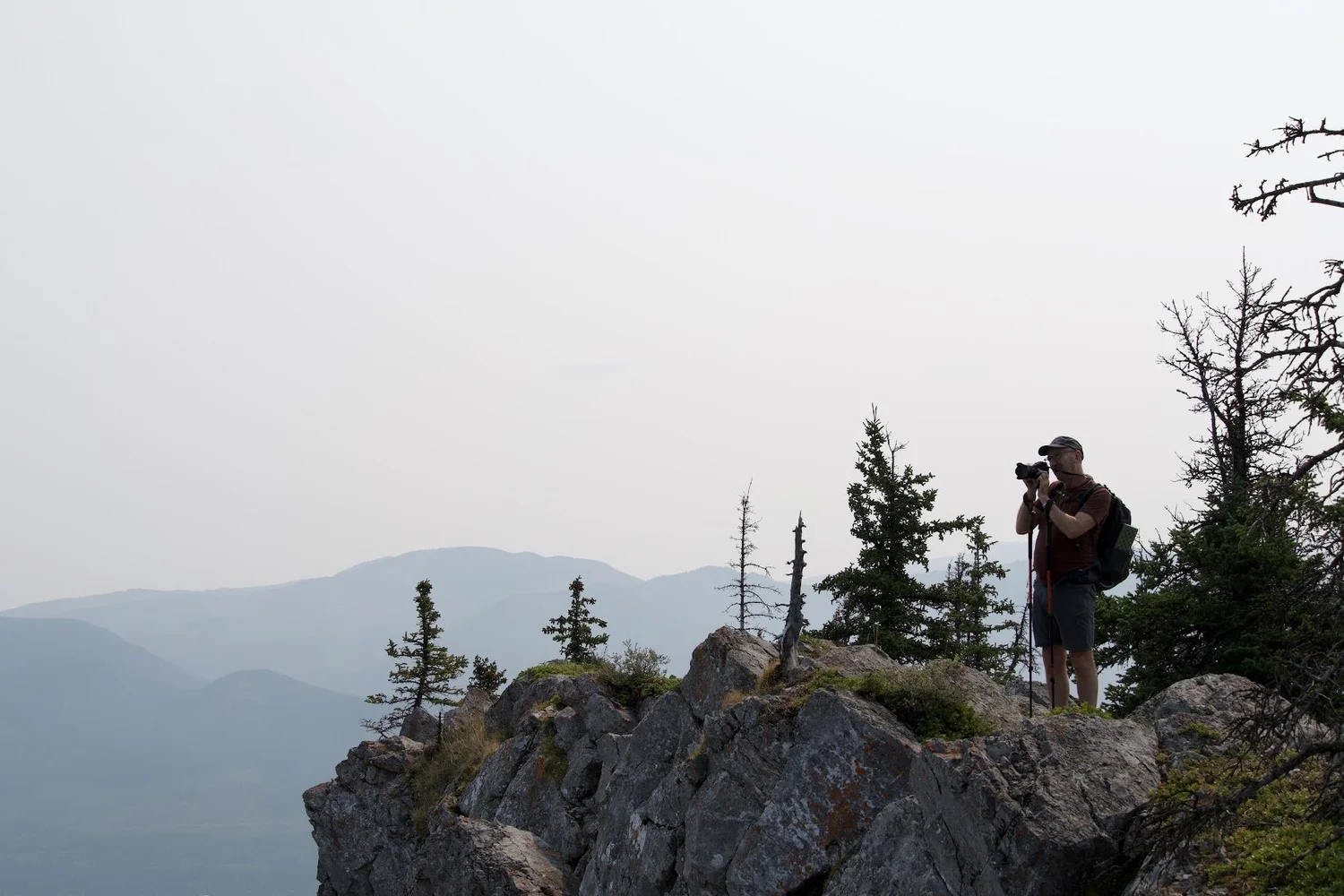
Be kind to your knees
Going up gets all the attention, but going down is where tired legs complain. Shorten your stride, let your poles take some of the load, and take the descent as slowly as the climb.
Good boots with real grip, broken in at home, matter more than any piece of technical gear. So does a pack that fits: a comfortable 20 to 30 L daypack with room for water, snacks and an extra layer is all most day hikes need.
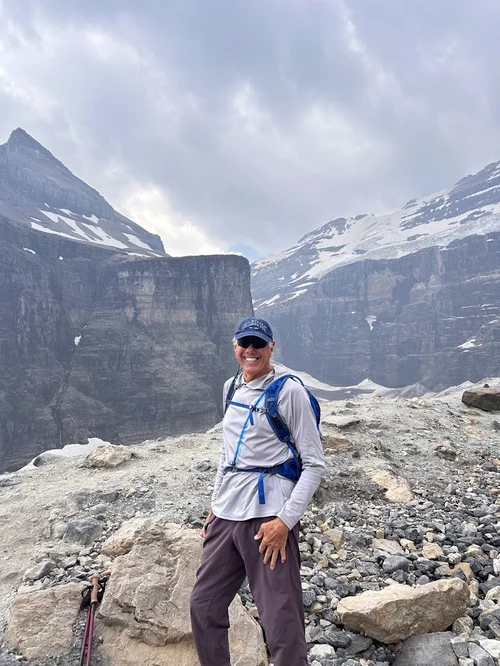
Choosing your season
July and August usually bring the most snow-free trails and the best wildflowers. September is cooler and quieter, and from mid-September the larches turn the high basins gold. In early summer, snow can linger on the high passes, so lower lakes and valley walks are often the better choice.
Whatever the month, the mountains make their own weather. A rain jacket, a warm layer and a hat belong in your pack even on a blue-sky morning, and so do sunscreen and sunglasses: the sun is stronger up high than it feels.
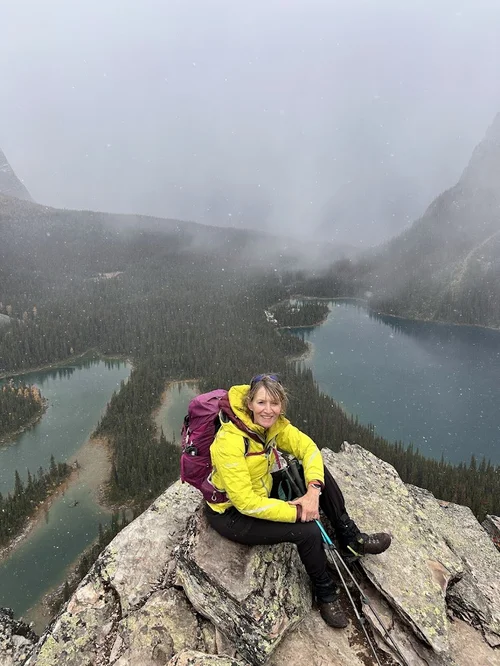
On a good hiking day, the rest stop is part of the hike.
Rest is part of the plan
The best hiking trips have a rhythm: a bigger day, then an easier one. Choose a comfortable base close to the trailheads, plan at least one gentle day in the middle, and give yourself an evening or two to do nothing at all.
On our own multi-day trip, guests stay at Everwild Canmore, where a soak and a sauna at the end of a big day are part of the plan, not an afterthought.
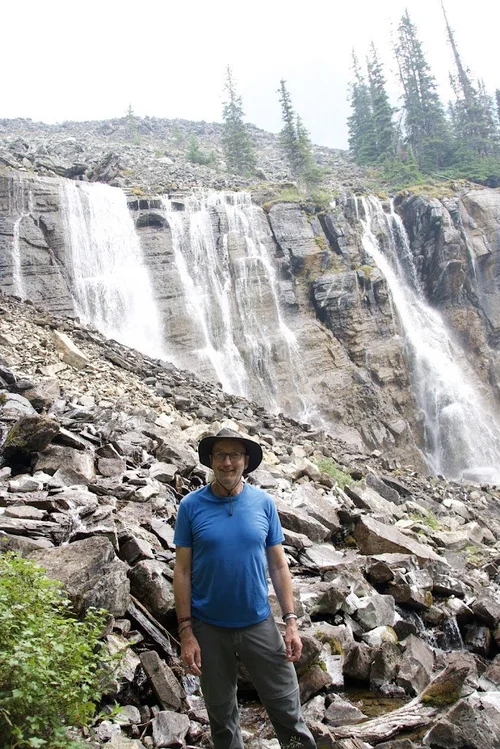
Why many travellers choose a guide
None of this needs a guide. But if you’d rather spend your energy on the trail than on logistics, a guide takes care of the parts that wear you out: choosing the right route for the day’s weather, driving to trailheads, sorting out park passes and shuttles, and carrying the first aid and communication gear you hope never to need.
Our guides are ACMG-certified, trained in wilderness first aid, and happy to stop as often as you like. On our 8-day trip, groups of six or more have two guides, so faster and slower walkers can each go at their own pace. We also plan private day hikes around your group.
Where the day really ends
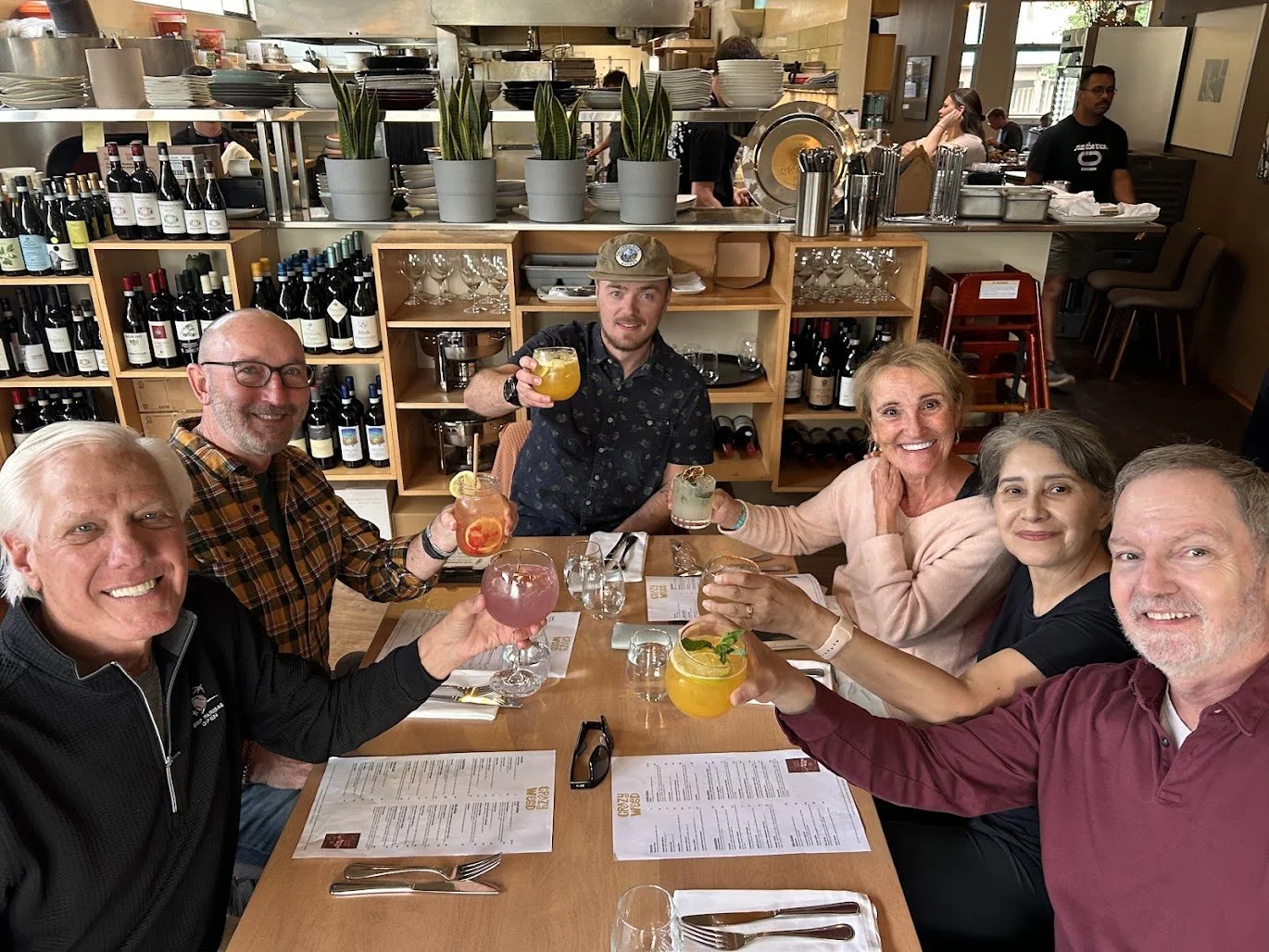
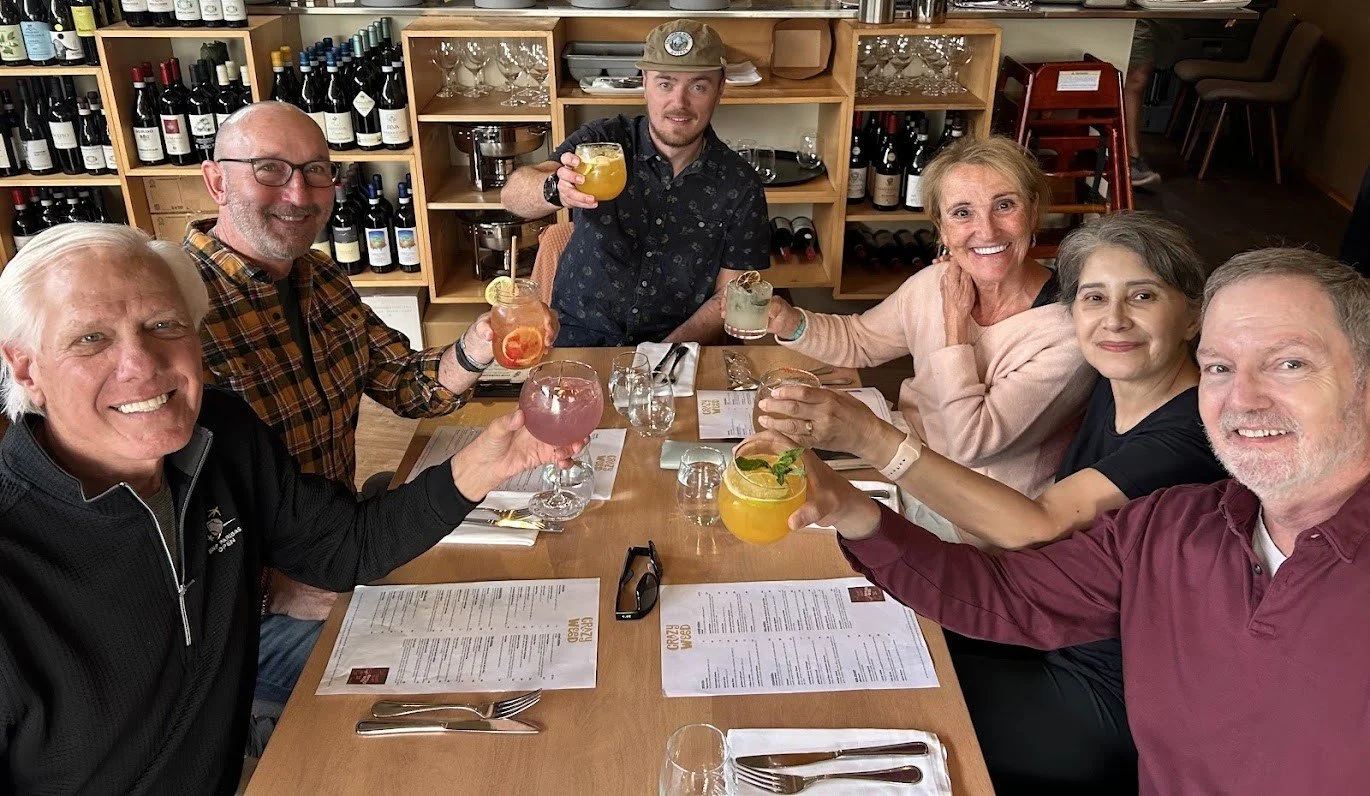
Ask anyone what they remember from a week in the mountains, and it’s rarely just the view from the top. It’s the table at the end of the day: boots off, cheeks a little sun-kissed, glasses raised to a trail that felt like a lot to ask that morning.
Somewhere between the first switchback and the last toast, a group of near-strangers becomes something closer to friends. The stories get retold, and get a little taller each time. Someone admits they nearly turned back on the last climb, and everyone is glad they didn’t.
That part never makes the packing list. It’s often the part people treasure most.
The mountains will wait
The Rockies have been here a very long time, and they’re not going anywhere. Neither is the feeling at the top of the climb, when the forest falls away and the whole valley opens up below you.
So go at your own pace. Stop often. Look up.
The best views in the Canadian Rockies are still out there, and there’s no age limit on them.
Hiking over 60: questions
Anything we haven’t covered? Ask Jacob a question.
Is the Canadian Rockies a good place to hike over 60?
Yes. There are trails for every level, from nearly flat lakeside loops like Emerald Lake (5.3 km, 52 m gain) to big alpine days. Fitness matters more than age, and a steady pace with regular breaks makes the bigger hikes achievable for many active hikers in their 60s and 70s.
How fit do I need to be for a hiking trip in the Rockies?
For most classic day hikes, you should be comfortable walking 8 to 14 km with 500 to 800 m of elevation gain, several days in a row. Shorter trails like the Moraine Lake Rockpile need very little climbing.
What are the easiest scenic hikes in Banff and Yoho?
The Moraine Lake Rockpile (1 km) and the Emerald Lake Loop (5.3 km, nearly flat) give big scenery for very little effort.
What is the best month to hike in the Canadian Rockies?
July and August usually bring the most snow-free trails and the best wildflowers. September is cooler and quieter, and from mid-September the larches turn gold.
The Rockies, at a pace that suits you
If you’d like company on the trail, we’d love to help you plan it. Tell us how you like to hike, and we’ll suggest the right days.